
Getting someone out: $80–$180
Standard Sydney call-out for after-hours attendance. Ask before booking, not after the invoice.
The first thing that happens is not a booking. It is a plumber telling you what to shut off right now, because the minutes before anyone arrives are where most of the damage is either done or prevented.
The honest test is whether it is still getting worse while you wait. Water, waste or gas going somewhere it should not, and not stopping. A burst pipe, sewage backing up into the shower, a hot water tank emptying through the ceiling, or any smell of gas: those are emergencies, and waiting until morning multiplies the damage bill.
Then there is the category people apologise for calling about: the only toilet in the house blocked, no hot water with a newborn, a drain backing up the night before an inspection. Call anyway. An after-hours call here reaches a plumber, not a promise of one tomorrow.


The cheapest fix at 9pm is to put back what was there. On an exposed coastal property that is how the same call happens again in a few years.
Where a fitting lives outside near salt air it should be chosen for that from the start. It costs very little at the point of installation and a great deal in repeat visits.
If the fault turns out to need digging, loose ground changes the job: trench walls do not hold, so a hole that would stand unaided elsewhere needs shoring, and that is not after-hours work.
What tonight can do is clear, camera and make safe. Anything structural gets scoped properly in daylight, and we would rather say that than start something at 11pm that cannot be finished safely.
Ground close to the water holds more of it, sits lower, and moves more than ground further up. Over decades that shows up in the drainage as joints that have opened slightly, falls that have flattened, and lines that silt where they once ran clean.
Perched by the ocean, Clovelly’s pipes and fittings cop constant salt and moisture that speed up corrosion, cracking and leaks over time.
None of that is an emergency by itself. It is the reason an emergency here often turns out to be the last stage of something that has been developing quietly, and why the camera run after the clear is worth more than the clear.
Plenty of Clovelly’s older homes still run on original clay sewer lines prone to root intrusion and collapse. A camera pinpoints the problem fast.
Clay drainage is laid in short lengths, so a single run has a great many joints, and after decades each one has opened a fraction. The line copes fine at normal flow and stops coping the moment demand spikes, which is why so many of these calls come on a weekend morning or after a full house has been showering.
Clearing restores flow the same night. Whether it holds depends on what the camera finds, and that is worth doing before the next long weekend rather than after it.
If this is the second or third time, the useful thing you can do at 2am is write down the date. Two or three of them tell a plumber more than any description, because the interval reveals how fast the obstruction rebuilds.
A shortening gap between call-outs is the signal that jetting has stopped being the answer. That is a daylight conversation, not a tonight one, but tonight is when the evidence gets recorded.
Clovelly wraps around its sheltered bay and beach in Sydney’s east (postcode 2031), neighbouring Bronte, Coogee and Randwick. With narrow coastal streets, older homes and a salt-air setting, blocked drains are a familiar story here, and one we handle every day.
Salt air shortens the life of everything metal on the outside of a house: tap spindles, external copper, hot water casings and the fixings holding them up. It is slow and even rather than dramatic, which is exactly why it tends to be noticed all at once.
The emergency version is usually an external fitting letting go. Isolating at the meter stops it immediately, and the replacement should be specified for the environment rather than like-for-like.
Being so close to Clovelly Bay and Gordons Bay, sand and grit wash into gully traps and drains, gradually restricting the flow.
Fine sand washes and blows into stormwater pits and lines and settles wherever the flow slows. Clearing it restores the drain the same day, which is genuinely useful, and it does not stop more arriving next season.
The question worth asking after the emergency is whether the line has a low point holding it. Sand collecting evenly is maintenance; sand collecting at one spot every time is a gradient problem.
Standard Sydney call-out for after-hours attendance. Ask before booking, not after the invoice.
Roughly $120–$160 in daylight. Someone is out of bed and on the road, and the rate reflects it.
Where most single-fault after-hours jobs land once attendance, labour and small parts are counted.
Slab leaks, gas line work, anything that means opening a wall overnight. You approve the figure first.
We would rather book you for Monday at daylight rates than take a premium for a job that was never urgent.
The price is agreed before work starts, including at 2am. Figures here are indicative of the 2026 Sydney market rather than a quote from us, you get your own number as a fixed price before any work starts.
Not a call centre. You describe what is happening, we tell you what to shut off right now, and whether this genuinely needs someone tonight. Sometimes it does not, and we say so.
The nearest available crew heads for Clovelly with the common failure points already stocked on the van: pipe, fittings, valves, drain gear.
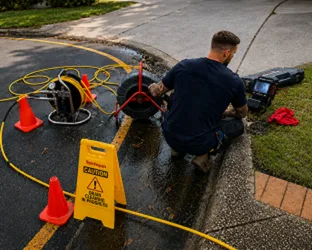
First job on site is stopping the damage: isolate, contain, make safe. Then you get a fixed price for the proper repair before it starts.

Most emergencies are permanently repaired on the spot. If a part has to wait for a supplier, you are left safe, watertight and functioning in the meantime.
Leave your details and an on-call plumber rings back. You will get instructions on what to isolate before anything else.
Call for the fastest response, any hour. Or send the form, after-hours enquiries get a callback from the on-call plumber, not an inbox.

Leave your details and our local Clovelly team will call you back fast.